Tuesday, May 8, 2012

Past Life Regressions


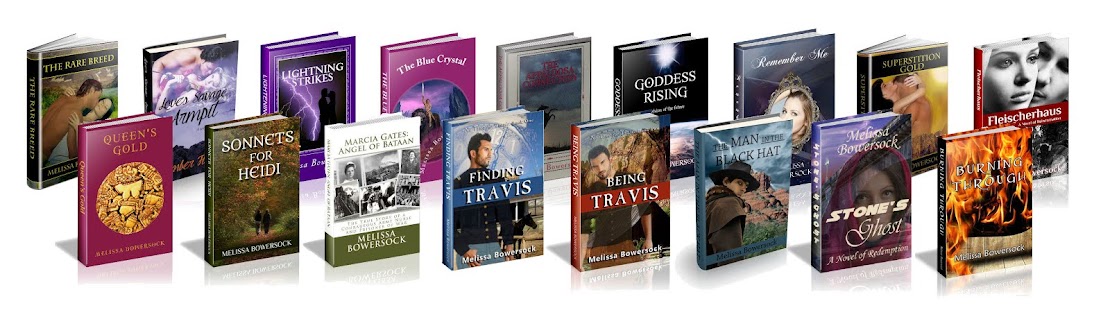
I am often asked about the hypnotic past life regressions that take place in my novel, Queen’s Gold. In the story, a man witnesses a past life where he found and then hid fabled Aztec gold. The story unfolds as he and others try to find the ancient treasure.

But that’s all fantasy, right?

In a word, no.

Past life regressions are very real and very powerful experiences. Unlike having a psychic tell you that you were Cleopatra or Napoleon (and why do they always pick famous historical people?), under hypnosis the past life unfolds in your own mind—you see it, hear it, feel it. You’re the one telling the hypnotist what you see. Actually people can experience the regression in a variety of ways depending on the mode, or sense, they use most. When I am hypnotized, I see the past life in my mind; others may hear it but not see, or simply feel it. I once hypnotized a woman who described the life to me in very clear detail, but after the session revealed that she didn’t “see” anything, but simply felt it all. Whatever modality the brain uses to review the past life, it still conducts the information to the person in a very real and compelling way.

What if you don’t believe in past lives?

Actually belief is not required. This seems to run counter to so much that we have been taught about spirituality, but it’s true. I’ve had clients who have told me flat out they don’t believe in reincarnation, others that they weren’t sure about it, but all were still been able to review past lives in order to understand issues at work in their current lives. For people who are (pardon the pun) dead-set against reincarnation, I tell them to simply view the past life as a metaphor. Applied to their issues in this manner, much like a dream, it can still tell them vast amounts about who they are and why they do what they do.

So how does hypnosis work?

Hypnosis is a very normal and natural altered state of consciousness, a state we all experience from time to time. Have you ever “zoned out” while watching TV? Or driven to work on “auto pilot?” That’s the same kind of altered state as hypnosis. Some misconceptions about hypnosis are that it’s a magical or eerie state, or that it feels very weird, but it’s actually very normal. Some people wonder if they’ve really been hypnotized at all (like my character in Queen’s Gold), just because it feels like such a normal state and they were expecting something otherworldly. The zombie-type states you see depicted in movies and on TV are pure fantasy. 

Induction is accomplished by the gentle use of my favorite things—words. Using only words, clients are invited to visualize a peaceful and restful place in their minds where they can relax and enjoy the experience. The old “vatch de vatch” technique is silly and unnecessary, if it was ever used at all. You just feel as if you are relaxing in a comfortable chair with your eyes closed. You’re conscious the entire time, aware of everything going on around you as well as what your subconscious is revealing to you. I liken it to watching TV in one room while a radio plays in another; you can shift your awareness back and forth between one (the present time) and the other (the past), concentrating on one but still aware of the other. 

There are several things that hypnosis is not.

It is not mind control. No one can force you to do anything you do not agree to. I found that out personally when a hypnotist asked me to describe a meeting in one of my past lives that I knew was leading to a sexual encounter. I simply told him I was not going to talk about it and we moved ahead to something less intimate. A respectful hypnotist will never push such an issue. Usually, if a hypnotist’s suggestion conflicts with a client’s value system, the client simply brings him- or herself up out of hypnosis; they just “wake up.” I always give my clients a “release mechanism” so they can bring themselves out quickly and easily anytime they feel a need to do that. They’re in complete control at all times. 

So what about those stage hypnotists who make people act like chickens? The “control factor” is still zero. Think about it: we’ve all seen or heard about those stage shows—we all have expectations about what happens there. Does anyone really think that if they volunteer to go on stage that the hypnotist will suggest they do something BRILLIANT? Anyone who volunteers is agreeing to play the part, whether they consciously admit it or not. For some, hypnosis (like alcohol) is a convenient “excuse” to act out and not take responsibility for their behavior, but in reality, no one is forcing them to do anything. 

But back to past life regressions …

People who have never experienced it are inclined to say, “Oh, your mind is just making that stuff up,” and that’s certainly a possibility. I’ve found, however, that when I try to guess what’s going to happen next in a regression, I am more often wrong than right. If I were making it up, wouldn’t I know what was going to happen? In addition, most people agree that they would not choose to fantasize about the incidents that come up. I kid my husband about the fact that he gets killed more than any other person I know. He’s had his throat slit, been clubbed to death, been stoned (literally), and been poisoned. I think if I were making this stuff up, I’d chose less traumatic ways to die.

And speaking of death, experiencing it in a past life regression is much easier and more peaceful than you might expect. I know death scares a lot of people to death (?), but in a regression passing over is usually a very simple and painless matter. As happens in my book, it can be done without pain and without emotion and reviewing it does not scar the present-day person. Actually, in my own experience, I’ve found that reliving past lives and deaths has actually taken away any fear I might have had.

And what about that part where people recognize each other from past lives?

That definitely happens. In all the past lives that I’ve reviewed and helped others to review, this scenario comes up quite often. It seems that we interact with important people in our lives over and over again. The relationships often change, as do the sexes, but the feelings can be constant and vivid. In my past lives, I’ve encountered many from my current life: my husband, my father, my grandmother, my daughter. When we “meet” someone like this in a past life, we are able to recognize them even though they don’t look the same. Apparently their essence, their soul, is visible to us behind the unfamiliar face.

 So is Queen’s Gold a true story? No; it’s pure fabrication.

With the exception of the past life regression. That’s as real as you can get.


Tuesday, May 1, 2012

Vanity Presses


In my last post, I discussed the rise of self-publishing and how the perception of it has changed dramatically over the last 10 years. Luckily it has morphed from the proverbial red-haired step-child into a respected and viable option for writers, often successful and even lucrative.

That’s the good news.

In my post, I talked a bit about vanity presses and how they worked in the olden days of traditional publishing. The bad news is, they have morphed also, and still prey on naïve and unsuspecting writers.

It used to be that you’d see an ad for Vantage Press in the back of every magazine ever sold. (I was surprised to find that they still exist, except now instead of a black and white ad, they have a slick webpage.) As I said in my last post, their game is that they get their money from you up front (VP’s webpage estimates between $5,000 and $25,000 to publish a book!), then have little incentive to promote your book. I suppose that if there are any aging millionaires out there who still haven’t learned to use a computer and/or the internet, this might be the way to go. For most of us, however, that kind of initial outlay is prohibitive.

Enter the new breed of vanity press.

Some years ago, I had a manuscript that I believed in yet hadn’t sold to a traditional publisher, so one day I got to searching on the internet and found a place that offered to publish my book—for free! What a deal! What could possibly be the downside of that? Without researching (major mistake), I submitted my pride and joy and they quickly accepted it.

PublishAmerica has lulled a great many writers into a false sense of euphoria by being so accommodating. For absolutely no charge (I believe they still send a crisp $1 bill as an honorary “advance”), they will proofread and edit your book, then turn it into a beautiful and saleable paperback. They will even send out announcements to all your friends and relatives, and of course you can always buy as many books as you’d like at a discount. Sounds great, doesn’t it?

Guess again.

When I submitted my book, I was very confident that the story was tight, clean and ready to go, so I declined the editing service. When I proofed the book, I realized that they had put a disclaimer on the publishing page saying that I had refused editing and that the book was being printed verbatim as submitted by the author, or in other words, they were absolving themselves of any editing miscues. Fair enough, I suppose, although I didn’t care for proclamation. As it turns out, I was actually happy that I’d gone that route. After the fact, when I began doing more research that I should have done ahead of time, I read many complaints about their “editing” service. It seemed to consist entirely of running a spell-check of the manuscript, sometimes even changing words the spell-check found questionable—even changing names! I read that many writers found the “editing” to not only be of little value, but actually detrimental to their story. I was glad I didn’t have to deal with that.

While I was still operating under the naïve bliss of my good fortune, I was contacted by a rep who helped me with the cover. Luckily I already had a good idea of what I wanted for the cover, and they were very willing to go with my design. That part, at least, went well.

Next thing was the announcements. I happily sent in a list of every contact I could think of—friends, family, acquaintances. I figured any announcement had to be fairly benign, right?

Wrong.

The announcement included an offer of an advance discount to buy my book, the retail price of which had been set at $26.95! For a 204-page paperback! Clearly three times what it should have been. Oh, but luckily my friends and family had the chance to buy it at the steal price of only $16.95! Only twice as much as it should have been! What a gonga.

Luckily, only one person bit on this. I’d be embarrassed if more people had paid that price for the book. But of course with a retail price of $26.95, the book was not flying off the shelves in any way. As a matter of fact, I am hard-pressed to remember receiving any royalties at all from PublishAmerica, although granted this was many years ago. If I did get any, they were paltry.

But now that the book was published and available, now the real marketing began—selling to ME, the author. All of PA’s selling efforts come from this—weekly e-mails to the authors announcing this or that special or sale and how they can buy their books at a discount. Stock up now! Buy 50 and get 25 free! So now you can see how we’re slipping back to that moldering-boxes-in-the-garage phase, just like vanity presses produced decades ago. Same dog-and-pony show, different name.

In the meantime, I re-read my book and was aghast to find a handful of typos. I verified that they were in my original file and yes, they were. My fault. I really thought I had gone through the book with a fine-toothed comb, but obviously my helpful brain showed me what it thought I wanted to see, not what I needed to see. I sent an e-mail to PA’s customer service asking if I could correct these mistakes. I got a rather offended response saying, well, yes, I could correct the book, but only if I signed in blood promising that I would NEVER, EVER ask for any more changes to the book—EVER! That was fine with me, and I happily sent a corrected file.

Not long after that, I got an e-mail that the corrected book was available for purchase. I ordered a box, eager to be able to hand out a perfect book instead of the flawed first rendition. Imagine my shock when I checked the new books and found they had every one of the typos still intact!

Grrrr. E-mails flew, complete with the original one saying the book was fixed and ready for sale. I got a replacement box and checked immediately. Yes, typos fixed. Ok, but now I’ve got another box of unacceptable books to store in the garage along with the original box I bought.

*sigh*

Luckily it wasn’t too many years before I caught on to the self-publishing options now available. After publishing one or two unsold manuscripts through Create Space and being thrilled with the process, I was on a roll. I began the process of retrieving my rights for the older books of mine that had gone out of print or were no longer being promoted by their traditional publishers. After the fiasco with PA, I was particularly happy with Create Space’s level of cost of production, from which I could set a retail price that was patently affordable.

Finally, with several books under my belt, I sent an e-mail to PA saying I wanted my rights back. I told them I would NEVER buy another book from them (and obviously no one else was, either, at that price), so they might as well surrender my rights to me. Our contract was for 7 years and I was still a few years short of that, which they pointedly reminded me. I reiterated that they would most likely never sell another book and so recouping their “costs” was just not going to happen. They finally relented and agreed to sell my rights back to me—for an “administration fee” of $99.

At this point, cutting all ties to them was worth the price.

So the moral of the story is—do your research. There are a lot of options out there for writers; just do very diligent research on the companies offering their services. Particularly search the forums where writers talk about their experiences. Just reading the “what authors are saying” page on a company’s website is not enough. There’s a site called Predators and Editors that is excellent on this subject. Likewise, there is an excellent site for indie writers about more trustworthy companies.

There are some very good companies out there (Create Space, Lightning Source) and there are also some very bad ones. Keep in mind that the cost of printing these days is very cheap compared to yesteryear, and you should never have to pay thousands or even hundreds of dollars to be published. As a matter of fact, through Create Space you can literally—and I mean literally—publish for about $10 if you’re in the US. This is the cost of a proof and shipping (depending, of course, on how many pages your book is).

I don't know about you, but this does not seem like rocket surgery to me. Spend upwards of $25,000 to have someone else publish your book, or do it yourself for $10?

You decide.


Tuesday, April 24, 2012

The Pariah of Self-Publishing: NOT!


I follow a lot of writer’s forums online (LinkedIn, Goodreads, etc.) and there’s been a lot of debate over self-publishing vs. traditional publishing. Almost every day a newbie or wannabe author/writer will ask about the pros and cons, and all the old mythology immediately starts to surface. Those of us who have already self-published (and some quite successfully, thank you) are quick to point out the benefits, but there are always a few (often with hidden agendas) who pooh-pooh self-publishing and offer up all the old stereotypes.

I am happy to report that those stereotypes, with a few exceptions, are dead.

It used to be that the only reputable way to get published was traditional; that means getting an agent, having said agent send out your manuscript (all 40 pounds of it) to various publishers on either coast, waiting, waiting, waiting, getting back non-informational reject letters (“doesn’t fit our brand; best of luck”), and repeat ad infinitum (or ad nauseum). If a writer wanted to do anything other than this carved-in-stone formula, they would have to go to what was then called a “vanity press.” Vanity press has somewhat gone the way of the dodo, but it does still exist in slightly different forms. More on that later. Essentially a vanity press would print anything you asked them to, if you were willing to pay their price. This was very often in the thousands of dollars and came with much ego-stroking and promises of fame and fortune. The reality was often heart-breakingly disappointing.

The main problem with a vanity press was that they had their money up front. Once they did, there was no incentive for them to do anything to promote your book. You paid them to print it and they did; then you ended up with an empty bank account and countless boxes of books in your garage that you were left to sell or promote however you could figure that out. They had your money; you had your tarnished, dust-gathering dream.

Anyone who knew anything about publishing knew that if you weren’t published traditionally, by a recognized house, you were probably a hack, so any book with a vanity press brand was immediately pigeon-holed as crap. Some have even said such authors became pariahs, which may be true. It was as if once you had succumbed to the lure of the sham, you were branded a fool and no worthwhile publisher would even glance your way. You were dead in the water.

That was in the old days.

Over the last 20 years, publishing has undergone a huge transformation. For some reason (unknown to me) the industry began to pull back into a very fearful and conservative replica of itself. Instead of working to discover and develop the next up-and-coming brilliant author, publishing houses fixated on only proven authors and instant best-sellers. Instead of taking a chance on undiscovered genius, houses banked on household names and sure blockbusters. Uncovering and developing rough talent (of which there is never a shortage) lost out to almost assured (remember Sarah Palin’s book?) million-sellers. A never before published author had a snowball’s chance in hell of getting anywhere with the big houses.

Luckily, the cavalry was appearing on a distant ridge.

The large publishers’ reluctance to take a chance on new authors left a huge void in the writing world, but it wasn’t long before forward-thinking entrepreneurs were popping up to fill that gap. Small presses began appearing all across the country and the world. They didn’t need to have a New York address or populate a 5-story building in Manhattan. Many were small mom-and-pop businesses, started on a shoestring and willing to consider unknowns. At the same time, the internet was ushering in author’s showcase sites where writers could put up a sample of their writing and publishers, editors and agents could peruse at their leisure. It was a match made in heaven.

Then everything changed – again.

Digital printing, print-on-demand (POD) and the immediate transfer of data over the internet spawned the new and now wildly successful industry of self-publishing. Now for the first time, writers could publish their own works easily, affordably, and produce a quality product which paid for itself as readers ordered books. There was no huge cash outlay, there was no huge inventory to warehouse, no huge gamble to take. The old, slow, expensive process of printing, warehousing and shipping large quantities of heavy tomes was replaced by a sleek, cheap and efficient process that brought almost instant results.

The shackles had been thrown off.

So if self-publishing is so great, why does the debate rage on?

From my point of view, people who argue against self-publishing either have their own agendas or they are laboring under old stone-chiseled misconceptions. Here are a few of the arguments you’ll hear:

Self-published books are badly written and are rife with spelling errors, typos and bad grammar. Partly true. People are different and of course some writers may not have the best command of the language and/or believe they don’t need an editor or proofreader. Most, however, have a good understanding of their own limitations and are not shy about calling on outside help to polish their book. We writers are artists; we are creators and when we create a story, we want it to be the best it can be. This argument is most often promoted by (you guessed it) people who work as editors.

People who self-publish are just lazy and impatient and are not willing to do the work or to wait for a traditional publisher to accept them. There are some calcified brains who honestly think that self-publishing is just too easy and that “fact,” in and of itself, is a good argument against it. What they’re not considering is that some authors may have been working on their book for many years and may have spent many more years shopping it to every agent and publishing house they could find, only to be passed over again and again. Most writers are not cranking out a book every three months, slapping a cover on it and pronouncing it done. All the writers I know take their time, write their best and polish, polish, polish until they feel they have an interesting, satisfying story.

Self-published authors become “unpublishable” and are pariahs in the industry. False. By now everyone knows the story of the Celestine Prophecy, how it was self-published but became a huge seller and was picked up by a traditional publishing house. It’s not the only one, just the most famous. Self-publishing does not preclude being traditionally published. As for being branded a pariah, let me ask a question. Last time you bought a book, did you look at who published it? If you did, were you aware if the company was a self-publishing company or not? And if you were, did it influence your decision to buy or not buy that book? I’m guessing the answer to those questions is most likely no. We don’t buy a book according to who published it. We buy books because we want to read the story. We don’t buy an author because of who published their book; we buy them because we like their style and story-telling.

People who self-publish produce inferior books. False. Self-published books these days are quality products with crisp printing and beautiful and eye-catching covers. I would challenge anyone to pick up a self-published book and a traditionally published book and compare them. I doubt they’d find any differences. In one of the online forums, there was actually a guy arguing for offset printing (which just happened to be his business), saying it was still cheaper per unit price—but of course that’s only if you order a run of 5,000 books or so. Not only did this guy have his own agenda but he was advising writers to continue using an outdated and antiquated form of publishing that is expensive, bulky and unnecessary.

What’s really too bad about all this bull is that most of these shrill voices (1) have little or no real experience with the self-publishing process itself and (2) they promote themselves as experts, condescending to advise the lowly unpublished authors about the “truth” of self-publishing. They bank on their criticism and know-it-all manner to lead the newbie by the nose away from self-publishing and (ironically) toward whatever outdated method their business is based on. I find these tactics reprehensible.

Luckily, so do hundreds and thousands of my fellow self-publishers. Take a look at some of these online forums and you’ll see these sharks surface now and again, starting off with a very “helpful” post that includes some of the bashing above. Then watch the fun. My fellow self-publishers don’t suffer these sharks gladly. They zero in, tagging the false comments, rebutting with facts, ripping apart the advice to harken back to the old ways (“Ignore that man behind that curtain!”). It usually doesn’t take too many zinging comments before the shark turns tail to go look for more placid waters to hunt in.

Writers have discovered that they have the power.

And they like it.

Next time: The Evolution of Vanity Press

Wednesday, April 18, 2012

Perception is the Problem

Watching a program on PBS the other night, there was a discussion about the fact that the Bible, the Constitution and other important documents are interpreted very differently from one person to the next. Each of us reads through our own lenses, filters we have developed throughout our lives from our experiences, our upbringing and our teachings as well as the broader invisible cultural mores we absorb without even realizing. Because this accumulation process is transparent to us, we are often surprised when we butt up against someone with a very different opinion, and of course we tend to think that our view is “normal,” very often leading to heated discussions or even war.

In pondering this, I realized that reading any book or story is the same way. I, as the writer, set down what I believe is a story worth telling and tell it in a way that makes sense to me. I do my best to tell it so it is engaging, interesting, easy to follow and complete. When I judge that I have done that in the best possible manner, the book goes to print and is offered to readers. All that’s left is for the reader to follow along, reading my words so that the very same story is created in their minds. Right?

Wrong.

There can actually be a huge gap between the writer’s intent and the reader’s perception, wider or narrower depending on the agreement (or not) of those filters mentioned above. As a writer I have sometimes been completely blind-sided by a review wherein the reviewer tells details of the story that are not in the book. I remember reading one such review and wondering if someone took the cover off of my book and put a different book inside it, because what the reviewer was describing was not my story at all.

But it was.

Different filters. Different perspective. Somehow the reviewer’s brain had added details that seemed to make sense in the context of the story, no doubt details that were provided by some past experience or maybe wishful thinking. It was at that point that I realized that, no matter what I wrote, once I put it “out there” for the pubic, it was beyond my control what any reader perceived from my printed page. This even happened with an editor once. Before publication of another book, the editor sent me his proud draft of the back cover blub and again I had to wonder just what book he was referring to. The blurb was so glaringly wrong-headed, it made me cringe to read it. Luckily he was amenable to my “revisions.”

It’s not unlike doing a web page. You type in your information, align your text, pictures, and links in a pleasing configuration, preview it over and over as you tweak it and refine it, and when it’s perfect you upload it to the server and your creation is there for all to see. But then you visit a friend and ask her to check it out and when her browser brings up the page—it’s all wrong! The page is too narrow and the pictures have shifted and everything is out of place. Even the colors are wrong. What the … ?

Problem is, the friend’s monitor is not the same size as yours and the resolution is set at a different level, making all your perfectly-placed pictures small and grainy. This monitor has different color saturations, as well, so the colors that looked so complimentary on your monitor are all fighting with each other now. In other words, her monitor interprets the data differently than your monitor did. It’s all the same data; it’s just coming through two very different systems.

Just like our brains.

I remember once reading about a very well-known author (maybe Stephen King? John Irving?) saying that once he sold a book’s movie rights to a studio, he no longer considered it his story. I believe he (wisely) understood that the studio’s interpretation of the story was going to take it several steps away from his original intent, and then the studio’s presentation was going to take it further still. It’s a little like playing the old game Telephone. You whisper a phrase to the person next to you, who whispers it to the another, then another and another, and when the phrase finally comes back to you after twenty or so such steps, it’s evolved into something completely different. Perception.

The human brain is an amazing thing; it has evolved into something that can imagine, design and create something that never existed before. It can also hallucinate, become addicted, experience paranoia and hate, yen to destroy. It absorbs everything from languages to multiplication tables to celebrity gossip to physics. It seems to be hard-wired to embrace the divine, even if total understanding is beyond its grasp. And it even has the ability to study and understand itself. All these various abilities make its potential unknowable. It also just about guarantees that no two people will perceive anything in exactly the same way.

What’s an artist to do? Not a thing. It’s a given that our creations—books, paintings, music—will be perceived differently by different people. Everyone may not see the story I’ve told, see the shapes on the canvas, hear the harmonies. But some will. Some will feel the tug of those words, sink into the colors and shed tears with the soaring melody.

That’s enough for me.

Tuesday, April 10, 2012

Grammar Police

I’ve written before about typos and how they send me right up the wall (especially my own). Sure, we all make mistakes (doesn’t mean I have to like it), and it’s a natural human failing, much as we strive to keep our work clean and correct.

Now it’s time for the Grammar Police.

Word Usage

The English language is confusing. Having two words like bear and bare that sound exactly the same, yet mean two (make that three or four) different things can be frustrating and annoying, and our language is peppered with examples like that. It might help (but maybe not) to remember that our language is a distillation of many, many languages down through time, which means that several similar-sounding words have come to us from different derivations, hence the differences in meaning and spelling. Do you really need to know what word came from what language? No. Do you need to know how to use them? Yes.

On Facebook or any written forum online, you’ll often run into a long-standing ruckus between the self-appointed Grammar Police and the luckless souls who find themselves so policed. You might see sentences like the ones below, complete with comments about their usage:

Your an idiot.  

I went over to there house.

Every dog has it’s day.

Use it or loose it.

Every one of the above is an example of incorrect usage, and my Word spell-checker is indicating each one with a wavy line beneath the incorrect word. Do yourself a favor and if you see the wavy line under a word, check it out. It’s there for a reason.

Punctuation

I once helped a friend format a book for self-publishing. My job was not to edit but to format, so I did not proofread the book but did notice some problems. In every case where the author had a single word as a sentence of dialog, there was no period following the word.

“No”

“Yes”

“Okay”

Yes, it’s a fragment and yes, we’re generally advised not to use fragments, but we all know we don’t speak in perfect sentences and we very often speak in fragments, so I have no quibble with that. But fragment or not, that one word is a sentence. Put a period after the blinkin’ thing. I suggested (gently) that this person might want to go through and put periods after these one-word sentences, but the author never did. If there was a reason for doing it this way, I have no idea what it might be.

Punctuation is our friend. Really. It helps us to communicate to our readers how the thoughts we are writing down should be ordered. A period means the last sentence has come to an end. It means that last thought has come to an end. It sets us up for the next sentence, the next thought. Not having that period sets up the assumption that the thought is continuing without a break.

I saw the deer it ran through the bushes.

A comma indicates that there is a slight pause, but the train of thought continues on unbroken.

I saw the deer, and it ran through the bushes.

A semi-colon indicates that you’ve got two separate thoughts, complete unto themselves, yet they are connected in some way.

I saw the deer; it ran through the bushes.

In each case, the punctuation is a signal to the readers how they should read that sentence and how the thoughts should be ordered. Help your readers; use the correct word and the correct punctuation.

What’s the big deal?

Why the nitpicking? Aside from casting aspersions on your level of education, the main reason I rail against these things is because it pops the reader out of the story. If I’m reading and the story has grabbed me by the throat and dragged me relentlessly along on a lethal, fast-paced car chase, the sudden appearance of a their instead of a they’re will stop me dead in my tracks. Now not only am I no longer engrossed in the story (and cranky about it), but I have to re-read that sentence to make sure I know what the author is trying to say, and that makes me crankier. Writing a story is like leaving a trail of breadcrumbs; we’re leaving a trail of words for the reader to follow. If the breadcrumbs are scattered haphazardly, perhaps mixed in with some street gravel, readers will have a hard time picking out the crumbs and the direction we want them to take. Help your readers by giving them a good, clear trail to follow.

We may want our readers to work a bit while they’re reading: work to figure out who actually killed the philandering husband, or wonder earnestly how the star-crossed lovers are going to get back together when she’s in Paris and he’s in Timbuktu. But we don’t want them to have to work to figure out what it is we’re trying to tell them. To my mind, the reader should be drawn along that trail of words in an almost effortless way, so effortless that they forget they are reading and they are, instead, feeling the story, seeing the location, sensing the love or doom or conflict. If they have to stop frequently to re-read errant sentences and try to figure out what you’re really trying to say, they most likely will not enjoy the side trip and will not put your  next book on their “to be read” list.

All that aside, language is such a fluid, dynamic thing, is there really only one correct way to use words and punctuation? Absolutely not. That’s actually the beauty of language; we can use it in whatever way it serves our purpose. Let’s go back to fragments. MS Word will very kindly let you know every time you use a fragment, and that wavy line will tip you off. Ideally fragments are to be avoided. But there are plenty of times (like the single word sentences above) when we want to use a fragment and it’s entirely appropriate. Breaking the rules is fine as long as you (1) know the rules to begin with and (2) have a reason to break them. Breaking them for no reason will only serve to confuse and confound your readers.

I don’t know about you, but I want my readers to enjoy the experience of reading what I’ve written.


Thursday, March 22, 2012

The Artist's Process

Recently at my “day job,” I was fortunate enough to spend some time with a documentary filmmaker who was researching for a new film project. Like most of us, I am somewhat in awe of the film industry, probably because they are able to tell their stories in the most impressive, emotionally-charged way. A quiet, thoughtful book seems a pale second to all the CGI-created fantasy that flashes across the big screen. Granted, a book can have so much more in the way of plot―more complexity, more nuance―and can round out the characters with back story much better than a 90-minute movie can. They really do seem like two very different things, and yet … they both tell stories.

Wondering about this balance of similarities vs. differences, I asked her about her process. Did she story-board her ideas? Did she do an outline? Did she do most of her own filming?

Her answers surprised me. She filmed some on her own but if, funding permitting, she could hire a cinematographer, that person would do a good share of the filming as well. She talked about the importance of having someone else filming, seeing the subject through another’s eyes, having another person to bounce ideas off of. I realized the cinematographer for her would be much like an editor is for a writer: fresh eyes to see if the story flowed, if the characters played true, if the plot unfolded in a believable, unforced way. Authors, of course, are very isolated and insular story-tellers; having someone else look at our work is a good way to test if we are getting as much information out of our heads and onto the paper as we need to communicate the story. (I actually think that’s one of the hardest things about writing: knowing how much of the story is on paper and how much is still in my head, how much I know about my characters and how much my reader may or may not gather from the writing.) So this was definitely an area where, although the medium was different, the process was very similar.

The filmmaker said she did not story-board. She said she knew some filmmakers who scripted their entire film before starting, but she found that if she did that, she had a tendency to lock herself into the details and lost the openness that allowed the living, organic quality to infuse the work. If she set herself on a schedule, she found she was more worried about whether or not the sun was shining that day, whether the light was right for the filming she had planned. I could definitely relate to that. As I’ve written before about the dynamism of writing, I use a loose process that allows the story to grow and evolve, sometimes to my chagrin! I will set down a few descriptors of my characters (age, physical build, personality traits, main emotional drivers), then jot down maybe five bullet points that are the main development ideas and/or plot turns. I tweak those things a bit as I go just so I have a very brief outline of where I’ve been and where I’m going, but beyond that, I just open the gates and see where the story wants to go. 

I’ve been told I’m very undisciplined (which works for me), so it was nice to hear that this filmmaker did something very similar. Obviously there are a zillion ways to go about this, probably as many ways as there are story-tellers.

What’s your process?

(And now the lead character in my latest is dragging me back by the throat. Gotta write!)

Wednesday, March 14, 2012

Selling by Not Selling

We just had our 4th annual Tucson Festival of Books here in Southern Arizona. From its infancy, this festival has been massive; the very first year we ranked sixth in attendance (50,000) in book festivals across the country. By last year we had jumped to fourth (100,000 people), and this year we will probably go higher. But what really intrigues me is the fact that for numbers of authors in attendance, we are first. Over 400 authors show up at this two-day event, every single one of them hawking their wares.
 
So how the heck do you make your book stand out from all of this entrepreneurial noise?

I’ve appeared at every book festival from the start. The first year, I sold one book. The second and third years were better, but not by much. This year I almost ran out of books.

How did that happen?

Before I go into that, I have to say that so much of this is pure luck. With over 100,000 people browsing several acres of book vendors, both independent and large book-sellers, having the right person walk by my booth, see my book, and choose it to take home with them is just so much serendipity. You just can’t manufacture that, no matter what you do.

But you can improve your chances.

So back to the beginning. That first year, I sat in my chair, laid my books out on the table and waited. And waited. People walked by, glanced over, walked on. I chatted with my tent-mate. A few people stopped by to look. Time went by very S-L-O-W-L-Y. I felt like a leaf caught in an eddy behind rocks in a stream; I just marked time in my separate little area while the stream flowed by in front of me. When I finally sold that one book, I was pretty ecstatic, at least for a few minutes. It was the high point of the day.

I realized something had to change. I didn’t want any more excruciatingly boring experiences like that ever again.

For the second year I made bookmarks to give away. When people at the festival were being bombarded by efforts to SELL, SELL, SELL to them, I wanted to engage them easily, informally, on a friendly, non-aggressive basis. Most people were happy for the freebie; some declined, and that was fine. But at least the offer of the free bookmark slowed people down a bit, gave them a reason to stop and chat. I had succeeded in slowing that stream that was rushing past and now some of the water was swirling into my little eddy behind the rocks.

I also found that standing, not sitting, increased my odds of engaging with people. I was open, receptive, welcoming, on the same eye level with them―equals. People seemed much more willing to make eye contact, to follow up my “Good morning!” with smiles and comments of their own, rather than seeming to stand like errant children at the feet of the Published Author.

While all this was going on, I couldn’t help but notice my table-mate. Another author had set up next to me, selling his book on how to handle divorce. He also stood, as I did, but whenever someone stopped for more than a micro-second, he was out from behind the table, almost button-holing them, telling them all about his book, sometimes very obviously way more than they wanted to know. I continued my low-key, friendly interaction and sold my first book of the day. Some minutes later the divorce-author made a comment about no sales and I told him I’d sold a book. “What?” he almost shouted. “You sold a book?” He seemed almost insulted. I’m not sure if he thought my fiction ranked a low second to his non-fiction or if he thought my methods were too unfocused to produce results, but he was obviously not happy.

The third year was very similar; I handed out bookmarks, I stood and chatted at eye level with folks. This time my table-mate was a young woman who had written a book about her own life experience. She made a pile of about 6 books on the table in front of her, sat with her arms crossed and almost refused to look up. While I was engaged in almost continuous conversation with the ebb and flow of people, selling a book here or there, she had almost no one even look her way. Being a true introvert who has learned to be an extrovert, I could identify with her obvious discomfort but I sincerely hoped she would take a look around and learn from the experience.

Since that third year, I have been doing a lot of reading about book promotion. There are a ton of author forums online and some great blogs out there. One author who is writing particularly illuminating and pertinent information about promotion is Kristen Lamb. I’ve found that she is able to distill down and encapsulate very powerful information in just a few paragraphs. She kept mentioning her book, We Are Not Alone, and I finally realized I needed more than just the weekly blog and downloaded the Kindle version. It’s an absolute treasure trove of information. I haven’t finished reading it yet, but I’ve gained enough insight to tweak my process and take it to the next level. What was particularly gratifying was finding out that my free bookmark idea was a very good one. Kristen explains about the differences between putting up the neon sign that says, “Look at me! Buy my book!” (a la my divorce-author friend) and the non-threatening, non-expectant offer of something to the customer without a catch. I knew my bookmarks were working well, I just didn’t understand why.

Something else Kristen talks about are the social networks, tweeting or Facebooking in a quick but interesting way, again offering something (information, entertainment, education) to the customer without the flashing, “Buy my book!” sign. At the three previous book festivals, I had displayed all my novels (numbering 9 now), with posters that included reviews and pricing information. It was a lot of books and a lot of information, too much to read by most people walking by. For the 2012 festival, I decided to concentrate on just one book, my latest, the non-fiction biography of my aunt who was an Army nurse and Japanese prisoner-of-war in the Philippines during World War II. I had my novels there but did not display them on the table. I figured if anyone wanted to talk fiction or remembered me from previous festivals and wanted to look, I could whip them out, but I kept my display simple with the one book and a poster that said, in very large letters, “Could YOU survive a prisoner-of-war camp?” I figured the question was brief enough to be read and understood quickly, yet provocative enough to make people think and perhaps want to know more. Turns out I was right. I had several people stop and say just that, “That’s quite a question, isn’t it?” and then proceed to tell me stories of loved ones or friends who had endured similar experiences. The question, along with the free bookmarks, was a great way to engage people, to start the discussion, to share and exchange. And, it turns out, to sell books.

Who knew? The best way to sell books is by not selling. Interestingly enough, I had been very excited about the 2012 festival, about handing out bookmarks and meeting and talking to people. When I thought about it beforehand, I wondered why I was so excited when the previous festivals had been less than lucrative. Financially the festival had been almost worthless, but I was looking forward to it with energy and excitement. Instead of a dreaded selling event, it had become the opportunity for me to connect with people, to chat with my fellow readers, to appreciate good books regardless of who wrote them. By not concentrating on selling, I was taking the expectations off of myself and therefore off of the people who stopped by. By freeing myself and them from the burden of that heavy neon “Buy!” sign, we were now able to simply enjoy the conversation and the beautiful day. The fact that I was selling a book every 15-20 minutes was gloriously irrelevant and serendipitously amazing.

And the best part of it all? I had a fabulous, fun time!